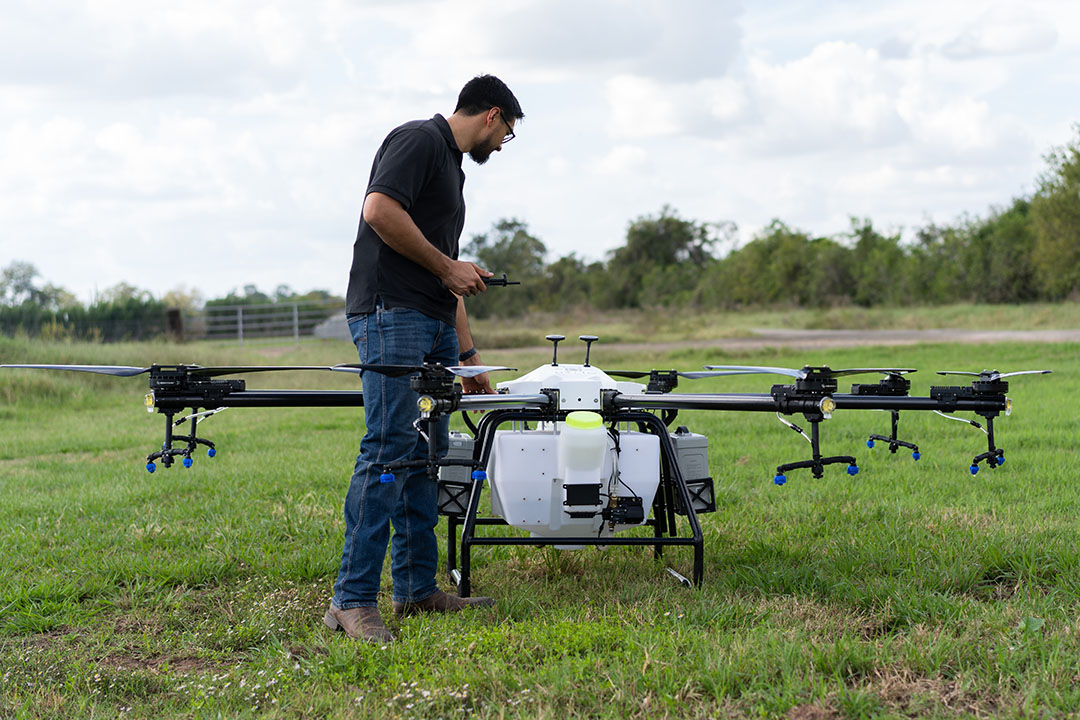
By a 1,200-acre row-crop engineer-farmer (sources: USDA-ARS, Kansas State University, University of Nebraska-Lincoln)
A $25,000 agricultural drone is only as reliable as its last maintenance cycle. Kansas State University’s 2022 on-farm study of 42 DJI Agras units found 70 % of in-season spray failures traced to clogged centrifugal nozzles, while Nebraska-Lincoln’s 2023 durability trials showed structured maintenance extended mean time between failure (MTBF) from 180 to 510 flight hours. Below is a minimum practical schedule—four tiers, zero excuses.
Daily maintenance is non-negotiable to prevent chemical residue buildup and minor damage from escalating. USDA-ARS (2023) reports 92 % of nozzle blockages occur within 24 hours of last use.
At 50 hours, wear on critical spray and control components becomes measurable. Kansas State (2022) found 50-hour nozzle swaps cut drift claims 62 %.
By 200 hours, mechanical and electronic drift can cause sudden failures. Nebraska-Lincoln (2023) found 200-hour motor inspections caught 11 impending bearing failures.
Annual overhaul ensures regulatory compliance and long-term airworthiness. Purdue Ag Econ (2024) estimates one prevented crash saves $7,200 in hull and crop damage.
Treat the drone like a $900,000 combine—skip the schedule and you’re gambling yield on a $12 nozzle.
